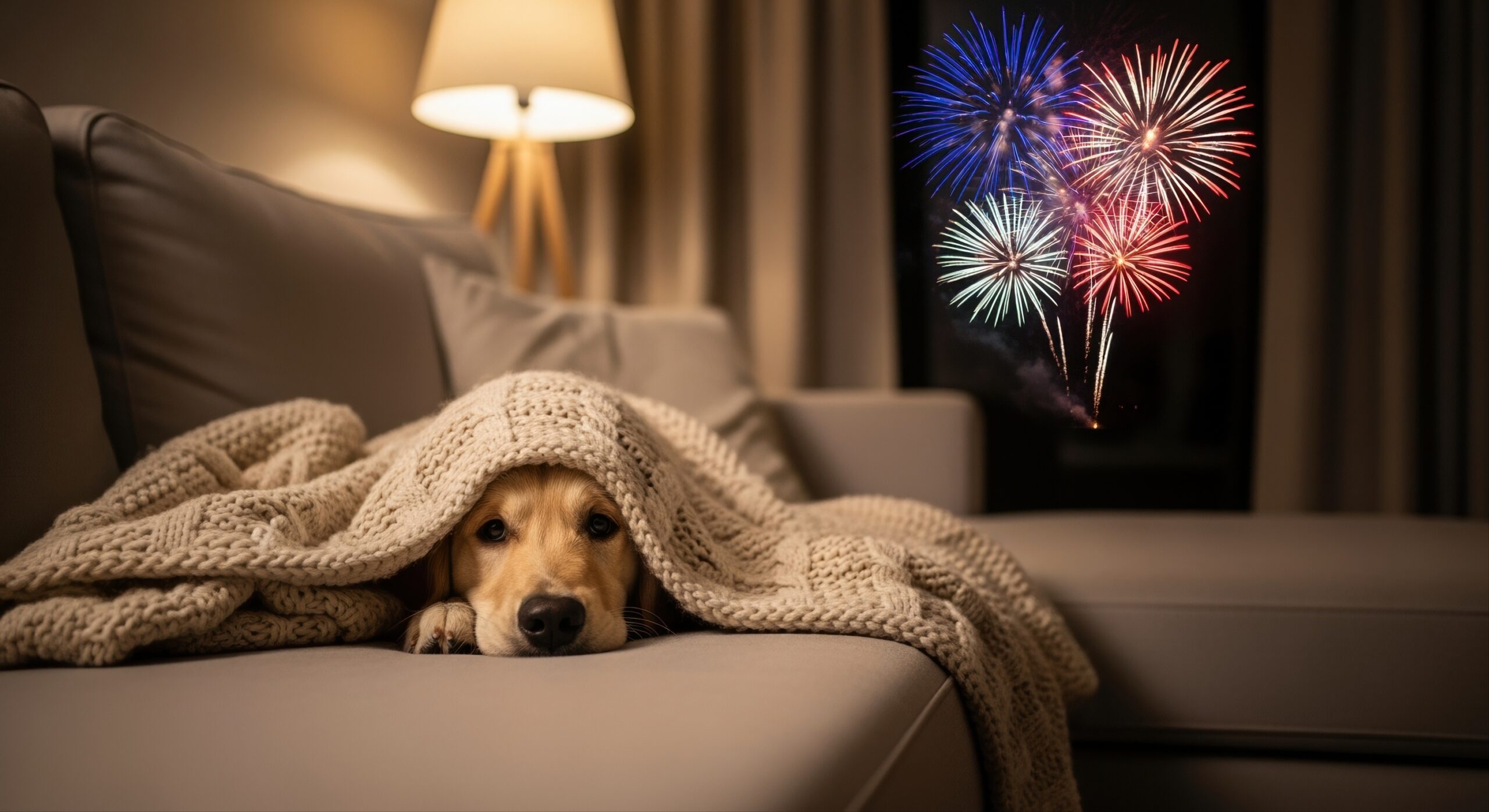
For many people, New Year’s Eve is a time of celebration, countdowns, and fireworks. For pets, however, it can be one of the most stressful nights of the year. Loud noises, flashing lights, crowded homes, and disrupted routines can leave dogs and cats feeling anxious, confused, and overwhelmed.
Understanding how New Year’s Eve affects pets — and knowing how to prepare — can make a huge difference in keeping your furry companions safe, calm, and comfortable as the year comes to a close.
Why New Year’s Eve Is Stressful for Pets
Dogs and cats experience the world very differently than humans. Their hearing is far more sensitive, which means fireworks, popping champagne corks, and noisemakers can sound painfully loud and unpredictable. Pets don’t understand that these sounds are temporary celebrations — to them, it can feel like a constant threat.
Common triggers on New Year’s Eve include:
- Fireworks and firecrackers
- Loud music or TV volume
- Guests coming and going
- Changes in routine (late nights, missed walks)
- Bright lights and sudden movement
This overstimulation can lead to pacing, hiding, trembling, vocalizing, destructive behavior, or attempts to escape.
Preparing Your Home Before the Noise Starts
Preparation is one of the most effective ways to help pets stay calm.
Create a Safe Space
Set up a quiet, comfortable area in advance where your pet can retreat. This could be:
- A bedroom
- A crate with a blanket over it
- A corner with their favorite bed and toys
Add familiar scents, like a worn T-shirt or their usual blanket, which can be very calming.
Reduce Outside Noise
- Close windows and doors
- Draw curtains or blinds to block flashes of light
- Use white noise, calming music, or a fan to mask sudden sounds
The goal is not complete silence, but consistency.
Keeping Pets Calm During Fireworks
Stick to a Normal Routine
As much as possible, feed your pet, walk your dog, and play at their usual times. Predictability helps pets feel secure, even when outside conditions are chaotic.
Stay Calm Yourself
Pets often look to their owners for cues. If you act anxious or overly comforting, your pet may interpret the situation as dangerous. Speak calmly, move normally, and avoid reinforcing fear-based behaviors.
Offer Distractions
- Food puzzles or treat-dispensing toys
- Chew toys for dogs
- Interactive play earlier in the evening to burn off energy
Mental stimulation can redirect focus away from frightening sounds.
Comfort Without Reinforcing Fear
It’s a common myth that comforting a scared pet will “reward” fear. Gentle reassurance is okay, but it’s best to avoid excessive coddling. Sit nearby, speak softly, and let your pet choose whether they want physical contact.
For cats especially, forcing interaction can increase stress. Let them hide if that’s what feels safest to them.
Natural Calming Options to Consider
Some pet owners find additional support helpful on high-stress nights like New Year’s Eve. These may include:
- Calming pheromone diffusers or sprays
- Anxiety wraps or snug-fitting shirts for dogs
- Natural calming supplements (with vet guidance)
Always test calming products before New Year’s Eve so you know how your pet responds.
Safety Tips You Shouldn’t Skip
- Make sure ID tags and microchip information are up to date
- Keep pets indoors, even if they usually go outside
- Secure doors and gates if guests are coming and going
- Never take pets to fireworks displays
Many pets go missing on New Year’s Eve due to panic-driven escapes, so extra precautions are essential.
Helping Senior Pets and Extra-Sensitive Animals
Older pets or those with existing anxiety may need additional support. Arthritic pain, hearing changes, or cognitive decline can make loud events even more unsettling. Providing extra padding, warmth, and a quiet environment can go a long way in keeping them comfortable.
If your pet has a history of severe anxiety, talk with your veterinarian well before the holiday about personalized strategies.
The Morning After: Getting Back to Normal
Once the noise has passed:
- Resume normal routines as soon as possible
- Take your dog for a calm, leashed walk
- Check your yard for debris if you let pets outside
- Offer praise and positive reinforcement for calm behavior
Most pets recover quickly once the environment feels predictable again.
Final Thoughts: A Calm Start to the New Year
New Year’s Eve doesn’t have to be a nightmare for pets. With a little preparation, patience, and understanding, you can help your dog or cat feel safe and supported while the celebrations happen around them.
By creating a calm environment, sticking to routines, and prioritizing safety, you’re setting your pet — and yourself — up for a peaceful transition into the new year. And that’s something truly worth celebrating.